How the fashion industry enters the Orientalism conversation and its affect on travelers
- Megan Forrester

- Apr 27, 2020
- 7 min read
Updated: May 16, 2020
I am in no way a fashion blogger or 'fashionista'--but I do try to keep up with the trends and usually try to wear something other than sweatpants on a daily basis. And what I have seen recently on social media and in magazines is how many fashion designers and celebrities wear clothing that could be considered 'exotic' or 'high fashion,' but in reality it reduces an Eastern country into one stereotype and may not actually highlight what the culture is really like.

The first incident which showcased this problem in the fashion industry was the 2015 Met Gala. If you're unfamiliar with the Met Gala, it is an annual fundraising gala held in May that benefits the Metropolitan Museum of Art's Costume Institute in New York City. The Gala is filled with an extremely exclusive guest list, primarily the most popular and famous celebrities and athletes across the globe. The only part that non-invited guests and the general public get a glimpse of is the extraordinary red carpet--with all the guests decked in head to toe couture aligning with the theme of that year's gala. The Met Gala always creates an absurdity of news articles and talk afterwards, but the reason the 2015 Met Gala stood out to me particularly was because of the theme, which was "China: Through the Looking Glass." The theme was supposed to celebrate China's influence on Western fashion, but instead received major backlash and many people accused the event of cultural appropriation. The red carpet that night consisted of garments that looked to be clear stereotypical Chinese outfits, but out of the sea of of kimonos and intricate head pieces, only one guest wore a gown designed by an actual Chinese designer--that guest being singer Rihanna. The gown, pictured above, was designed by up-and-coming designer Guo Pei and featured an imperial yellow, fur-trimmed cape that was embroidered with scrolls of flowa--which all together took Pei over two years to make. In an article by Vanity Fair, they applauded the singer for truly being accepting of the Chinese cultures and received a quote from Pei saying "It is my responsibility to let the world know China's tradition and past, and to give the splendor of China a new expression. I hope that people do know China in this way."
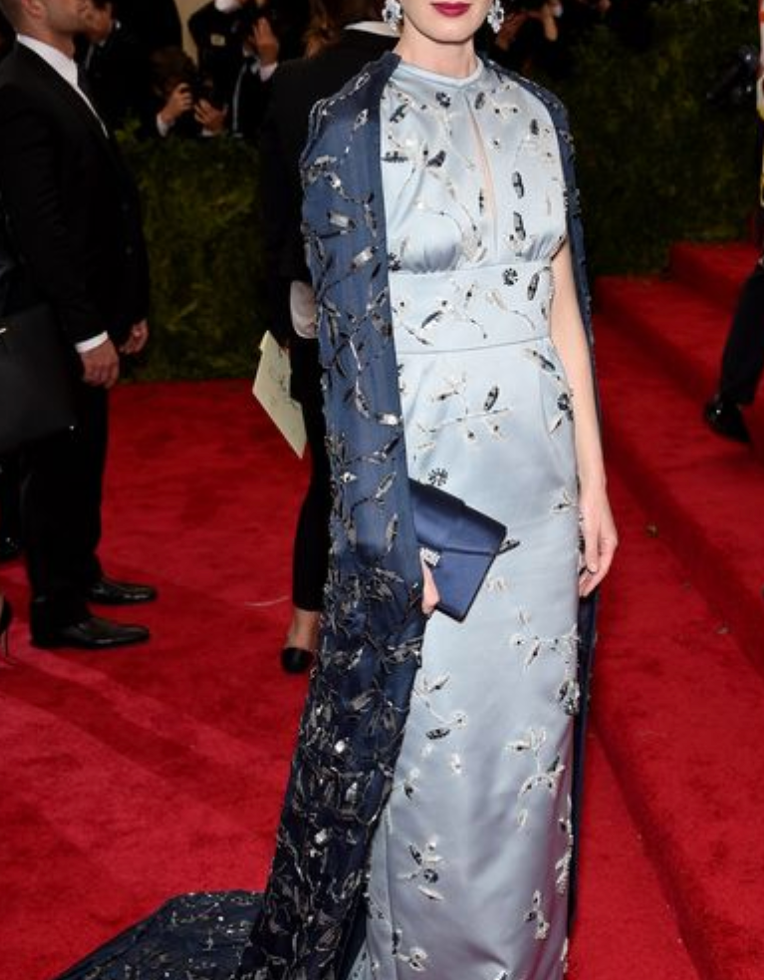
Although Rhianna was able to create a look that was respectfully done by a Chinese fashion designer, there were way too many looks to count that did not consider the concept cultural appropriation when putting together their outfit that millions and millions of eyes would see. A few examples of looks that showcase the idea of Orientalism are pictured below, all with designers from Europe or America. From left to right, Sarah Jessica Parker pictured in custom H&M, Emily Blunt in Prada, Karen Elson in Dolce & Gabbana and Georgia May Jagger in Gucci. Although these looks are beautiful, they clearly show Chinese stereotypes just molded into a dress. None of these designers have any deep understanding of Chinese culture and therefore are only going off of their pre-conceived perceptions of China.
And it's not just the Met Gala that is seen time and time again incorporating some sort of Orientalism into their clothing--many high fashion houses are doing campaigns and advertisements involving stereotypical content. For example, the large fashion house Dolce & Gabbana received major backlash and even resulted in people burning their clothes due to Chinese culture being stereotyped in their clothing. In an article in the New York Times titled "The Crash and Burn of Dolce & Gabbana," it discusses people's outrage after the fashion house created a video clip promoting their 2018 show in Shanghai, in which a Chinese model is being taught how to eat spaghetti, pizza and cannolis with chopsticks. The Italian fashion house released an apology video shortly after, stating "our families have always taught us to respect the various cultures of the world, and for this we want to apologize if we have made mistakes in interpreting your culture." These extremely popular designers, feeling that they are untouchable and able to do whatever they please, think they can use whatever culture they want for a particular campaign or dress--even if they have no understanding of that culture whatsoever.




Now, you're probably saying, "Megan yes we know that is cultural appropriation, Orientalism, whatever you want to call it--but why is this important to traveling and why does this really matter?" Yes, I agree that celebrities should not dictate how we live our lives, but unfortunately sometime they actually do. Let's say you were one of the millions of people who went on their Instagram or Pinterest right after the latest Met Gala, you probably will see dozens of looks that you either love or hate. Those ones that you love, won't you try and recreate that in your own wardrobe? Won't you want to show off to your friends that you are knowledgable in the area of high fashion and couture and talk about your favorite looks from the night? And finally, won't you need somewhere exotic and foreign to wear the headpiece that you created to look like Sarah Jessica Parker's at the Met Gala? The audience will feel like they have an understanding of Chinese culture simply by viewing these outfits that may not even accurately represent China and quite frankly could have been made by an American white male designer. How would this affect their traveling to China? Would these viewers feel the need to travel to China--thinking they already understand the culture? This image brings up all of these questions and most importantly--how would they treat Chinese locals thinking they know everything about their culture when really knowing nothing of importance. If all of these looks were like Rihanna's, created by an actual Chinese designer and holding a rich history, then yes you would be able to get a lot of useful information from the fashion. But since that was not the case, viewers could instill in themselves a false interpretation of Chinese culture and maybe of all Eastern countries entirely--blending them into one "agglomerated mass of apparently indistinguishable blobs" according to writer SE Smith--instead of actual human beings.

When you are seeing cultural appropriation on the runway or the red carpet, it can be hard to actually see the effect that can have on a culture in the long run. A great way of showing what an impact this has on other cultures is by looking at the Maasai people in East Africa. National Geographic discussed in an article titled "Striking Photos of Cultural Fashions You Have To See" how the Maasai people focus their fashion around the artwork of intricate beading. They include a photo of a Maasai woman, which is shown above, and in this photo you can just see in the expression of pride in her face on how much time and passion they have dedicated to this beading and how closely they hold it to their culture. Each and every colored bead symbolizes something different important to the locals--orange aligning with generosity, blue with God and green with peace. The Maasai trademarked their bead artistry so that they can further the lasting cultural identity they have established, as well as making it more difficult for large fashion houses to appropriate this work without permission. All this culture wants is to be respected and treated like human beings--human beings that can create an art form that is particularly special to them and remain accredited to them. This type of fashion is so integral to this culture's identity and tourists and large fashion houses should not exploit them or use their artwork as a profit. Imagine having someone else from another country steal what you have worked on for centuries and not even give you some recognition. The effect of Orientalism can create that feeling of worthlessness or not even feeling human, and this effect is slowly creeping into the fashion industry and needs to be stopped. The fashion and artistry that the people of Maasai have created should not be taken away from them, whether it's by tourists or popular designers, but instead it should be celebrated as part of their identity.
You may have little respect for the fashion industry after reading about those two examples of cultural appropriation and Orientalism, but don't make that claim just yet. Although these concepts are very prevalent in fashion right now, there are some sparks of positivity coming through the cracks.

An example of that positivity is young Nigerian designer Kenneth Ize. Ize was able to attend and showcase his work at the Arise Fashion Week, an annual event in Lagos, Nigeria which celebrates designers knocking down cultural stereotypes through the art of fashion. In an article for Vogue Magazine, Ize talked about how he "always wanted to see if there was anything like an African fashion week--or even African fashion" since there was little to nothing of an accurate portrayal of African fashion and culture on the runways today. But, Ize, who was awarded the Designer of The Year Award in 2019, was finally able to create a name for African fashion in a culturally appropriate way. Ize incorporated traditional textiles into a bold and contemporary aesthetic. Simply through his designs, several of those pictured above, Ize was able to pay homage to his Nigerian and Austrain upbringing and make the history of those cultures relevant today by modernizing heritage fabrics.
Another African designer at the Arise event said that "Nigeria has so much talent--and everyone's itching to be a part of this international world. Arise is a bridge showing people, this is Nigeria, this is us. We need to put respect on the name."
If large fashion houses can begin to incorporate designers from different cultures and allow them to highlight an adequate representation of that culture, the fashion industry would be taking a major step forward. Not only would exploitation and cultural appropriation end on the red carpet and runway, but audience members and viewers would have a much more respectful understanding of different cultures and act much more appreciative of that place when they travel there in the future. Even if your'e not a fashionista or knowledgeable to much of the fashion industry, much like myself, these issues are still crucial to our entire globe. It just goes to show that the effects of Orientalism are spreading, this just shows how it has engrossed much of the fashion world as well. There is a way out of this dilemma, but it is going to take one stitch at a time.
Want to learn more about Orientalism and fashion? Click here: https://www.youtube.com/watch?v=946ikfBnoKk


Comments